July 1, 2025, By Kartikey Tripathi
INTRODUCTION
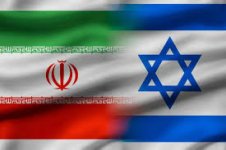
The Iran-Israel conflict is a complex and volatile issue shaping Middle Eastern geopolitics. Rooted in historical shifts and fueled by ideological, strategic, and regional dynamics, it has escalated from covert proxy wars to direct military confrontations. As of July 2025, recent events, including Israeli and U.S. strikes on Iranian targets, have heightened tensions. This article explores the conflict’s history, its current state, and the controversial angles that make it a focal point of global debate, drawing on credible sources to provide a comprehensive overview.
HISTORICAL CONTEXT
Before the 1979 Iranian Revolution, Iran and Israel maintained close ties under the periphery doctrine, viewing Arab powers as a common threat (Iran-Israel Relations). Israel supplied military equipment to Iran during the Iran-Iraq War (1980-1988) and bombed Iraq’s Osirak reactor in 1981 to curb nuclear ambitions. The revolution marked a turning point, with Iran’s new Islamic regime severing ties, calling Israel the “Zionist regime” and “Little Satan,” and advocating for its destruction.
Iran began supporting proxy groups, notably Hezbollah in Lebanon since 1982, providing training, weapons, and $400 million by 2010 (Iran-Israel Proxy War). It also backed Palestinian groups like Hamas and Palestinian Islamic Jihad (PIJ) from the 1990s, with Hamas receiving military training and approximately $20 million annually since 2006 (Hamas-Iran Ties). Israel countered with airstrikes, assassinations of Iranian nuclear scientists (e.g., Mohsen Fakhrizadeh in 2020), and support for Iranian rebels like the People’s Mujahideen.
MAJOR CONFLICTS
1: Lebanon War: Iran’s IRGC supported Hezbollah, with 6-9 operatives reportedly killed by Israel.
2: Gaza Wars: From 2008-2023, conflicts resulted in significant casualties (e.g., 2014: 73 Israelis, 2,251 Palestinians; 2023-present: 1,450+ Israelis, 32,000+ Palestinians).
3: Syrian Civil War: Iran supported Assad, losing 2,100 soldiers by 2018, while Israel conducted over 2,000 airstrikes in 2018, killing 631+ Syrian and Iranian personnel (Iranian Strategy in Syria).
Iran began supporting proxy groups, notably Hezbollah in Lebanon since 1982, providing training, weapons, and $400 million by 2010 (Iran-Israel Proxy War). It also backed Palestinian groups like Hamas and Palestinian Islamic Jihad (PIJ) from the 1990s, with Hamas receiving military training and approximately $20 million annually since 2006 (Hamas-Iran Ties). Israel countered with airstrikes, assassinations of Iranian nuclear scientists (e.g., Mohsen Fakhrizadeh in 2020), and support for Iranian rebels like the People’s Mujahideen.
MAJOR CONFLICTS
1: Lebanon War: Iran’s IRGC supported Hezbollah, with 6-9 operatives reportedly killed by Israel.
2: Gaza Wars: From 2008-2023, conflicts resulted in significant casualties (e.g., 2014: 73 Israelis, 2,251 Palestinians; 2023-present: 1,450+ Israelis, 32,000+ Palestinians).
3: Syrian Civil War: Iran supported Assad, losing 2,100 soldiers by 2018, while Israel conducted over 2,000 airstrikes in 2018, killing 631+ Syrian and Iranian personnel (Iranian Strategy in Syria).
Notable Conflicts Table
| Time | Name | Deaths | Result |
|---|---|---|---|
| 1985–2000 | South Lebanon Conflict | 559 Israelis, 621 SLA, 1,276 Hezbollah | Hezbollah victory, Israeli withdrawal |
| 2006 | Lebanon War | 165 Israelis, 1,954 Lebanese | Stalemate, both claim victory |
| 2008–2009 | First Gaza War | 14 Israelis, 1,434 Palestinians | Israeli victory |
| 2014 | Gaza War | 73 Israelis, 2,251 Palestinians | Both claim victory |
| 2023–present | Gaza War | 1,450+ Israelis, 32,000+ Palestinians | Ongoing |
| 2023–present | Israel-Hezbollah Conflict | 21+ Israelis, 300+ Lebanese | Ongoing |
| 2025 | Iran-Israel War | 200+ in Iran, 24+ in Israel | Ongoing |
CONTROVERSIAL ANGLES
The Iran-Israel conflict is fraught with contentious issues that fuel global debate:
PRESENT CONDITION- Israel’s Strikes on Nuclear Facilities: Israel’s June 2025 attacks on Iran’s nuclear sites killed over 200 in Iran and 24 in Israel, aiming to delay Iran’s nuclear program by at least a year (IAEA Statement). Critics argue these violate the UN Charter and international law, setting a dangerous precedent. The IAEA reported no elevated radiation levels, but the strikes risk pushing Iran toward nuclear weapon development (Iran’s Non-Compliance).
- Iran’s Nuclear Ambitions: Israel’s deep intelligence penetration may accelerate Iran’s nuclear breakout. Iran announced a third uranium enrichment site and threatened to withdraw from the NPT, with the IAEA declaring non-compliance on June 12, 2025, raising proliferation fears.
- Civilian Impact in Iran: Israeli strikes hit residential areas, killing civilians and evoking memories of the Iran-Iraq War (1980-1988). Public anger targets the Iranian regime for failing to warn citizens, with many opposing nuclear weapons but supporting energy programs. This could destabilize the regime long-term (Atlantic Council Analysis).
- Israeli Public Support and Goals: Most Israelis support the strikes, crediting Netanyahu’s government despite the casualties. Netanyahu aims for regime change in Iran to prevent nuclear weapon development (Netanyahu’s Statement).
- U.S.-Israel Alignment: President Trump and Netanyahu align on weakening Iran’s proxies and nuclear program but differ on methods. Trump prefers diplomacy, while Netanyahu sees war as necessary, creating uncertainty about U.S. policy (Trump’s Position).
- Impact on Gaza: Palestinians fear the Israel-Iran war distracts from Gaza’s crisis, risking escalated bombardment. Some blame Iran for Hamas’s actions, while Hamas sees strategic relief, though its strength wanes with Iran’s isolation.
- Regional and Global Implications: Iran’s weakened proxies (Hamas, Hezbollah, Houthis) reduce its influence. Russia gains from diverted U.S. attention and oil price spikes but risks Iran’s collapse (Russia’s Role). China condemns the strikes, seeking mediation to protect energy interests (China’s Stance).
- Energy Infrastructure Attacks: Israel targeted Iran’s gas facilities and a refinery, worsening energy shortages but sparing oil production to stabilize global markets. Iran could retaliate by blocking the Strait of Hormuz, impacting 20% of global oil (Energy Attacks).
The conflict escalated significantly in 2024 and 2025. On April 1, 2024, Israel bombed an Iranian consulate in Damascus, killing 16, including 8 IRGC officers (Israeli Airstrike on Consulate). Iran retaliated on April 13, launching over 100 drones and missiles, most intercepted by U.S. and UK forces (Iran’s Drone Attack). Israel struck back on April 19, targeting sites in Iran (Israeli Missiles Hit Iran).
In June 2025, Israel launched a surprise attack on Iranian nuclear and military facilities, killing top officials and scientists and destroying air defenses, marking the start of the Iran-Israel war (Israel-Iran Conflict History). The U.S. intervened on June 21, bombing three Iranian nuclear sites—Fordow, Isfahan, and Natanz—in “Operation Midnight Hammer” (U.S. Strikes on Iran). Iran retaliated, targeting U.S. bases in Qatar with no casualties reported (U.S.-Iran Confrontation).
A fragile ceasefire holds as of July 2025, but Iran’s proxies—Hezbollah, Hamas, and the Houthis—have remained largely silent, leaving Iran isolated (Iran’s Isolation). Ongoing conflicts in Gaza (1,450+ Israeli, 32,000+ Palestinian deaths) and with Hezbollah (21+ Israeli, 300+ Lebanese deaths) add to regional instability (Israel-Hezbollah Conflict).
CONCLUSION
The Iran-Israel conflict, rooted in decades of enmity, has reached a critical juncture in 2025 with direct military engagements and U.S. involvement. Its controversial angles—nuclear risks, civilian tolls, and global implications—underscore its complexity. As the region teeters on the edge of further escalation, the conflict’s resolution remains uncertain, with profound consequences for the Middle East and beyond.