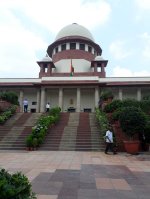
Once regarded as the sentinel of the Constitution, the Supreme Court of India has increasingly found itself at the very heart of political contestation. No longer limited to being a dispassionate arbiter of law, the Court today plays a decisive—even polarising—role in shaping the trajectory of Indian politics. Whether it's electoral integrity, constitutional interpretation, or civil liberties, the judiciary’s interventions are now central to the functioning—or dysfunction—of Indian democracy.
Historically, the Court has swung between phases of judicial activism and judicial restraint, but the current era seems marked by a complex and often contradictory mix of deference and dominance. On one hand, it has delivered verdicts that reinforce constitutional morality—such as decriminalizing homosexuality, expanding the right to privacy, and asserting the independence of the Election Commission. On the other hand, it has been accused of selective silence particularly in matters that implicate the executive branch.
A case in point is the prolonged delay in adjudicating petitions against the abrogation of Article 370. The Court’s decision to take nearly four years to hear what was arguably the most significant constitutional change since 1950 raised serious questions about its willingness to confront the government. By the time it ruled in 2023 that the reorganization of Jammu and Kashmir was constitutionally valid, many critics argued that the verdict had become politically irrelevant, if not legally toothless.
At the same time, the Supreme Court has assumed a more visible role in electoral politics, directly affecting institutional checks and balances. Its 2023 ruling mandating a non-political selection process for Election Commissioners was widely seen as a corrective step against executive overreach. Yet, barely a year later, the government circumvented that judgment by introducing a new law that restored control over the appointment process. The Court’s restrained response to this legislative backlash has led many to question whether its authority is being gradually eroded by majoritarian politics.
Moreover, the Court's intervention in free speech and dissent has been uneven. While it has struck down sedition charges in some high-profile cases and granted bail to political activists, it has often been hesitant to call out the misuse of draconian laws like UAPA. Critics argue that the judiciary is becoming increasingly comfortable with a form of "executive alignment," where it voices concern but stops short of meaningful confrontation.
The recent controversy over the Court’s role in the Ayodhya verdict, which simultaneously acknowledged the illegality of the mosque’s demolition and handed the disputed land to the Hindu side, exemplifies the paradox of judicial reasoning cloaked in political calibration. For many, the ruling was an act of conflict management rather than constitutional clarity—a moment where legality bowed to sentiment.
In this turbulent dance between law and power, the Supreme Court appears less like an aloof umpire and more like a player navigating India’s charged political terrain. Whether this transformation is a symptom of democratic decay or a recalibration of judicial realism is still an open debate. What is clear, however, is that the Court's role is no longer static—its decisions and silences alike now shape the very soul of Indian politics
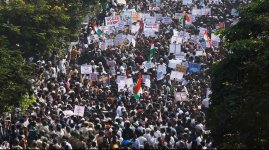
Mass protest during hearings and judgments
Historically, the Court has swung between phases of judicial activism and judicial restraint, but the current era seems marked by a complex and often contradictory mix of deference and dominance. On one hand, it has delivered verdicts that reinforce constitutional morality—such as decriminalizing homosexuality, expanding the right to privacy, and asserting the independence of the Election Commission. On the other hand, it has been accused of selective silence particularly in matters that implicate the executive branch.
A case in point is the prolonged delay in adjudicating petitions against the abrogation of Article 370. The Court’s decision to take nearly four years to hear what was arguably the most significant constitutional change since 1950 raised serious questions about its willingness to confront the government. By the time it ruled in 2023 that the reorganization of Jammu and Kashmir was constitutionally valid, many critics argued that the verdict had become politically irrelevant, if not legally toothless.
At the same time, the Supreme Court has assumed a more visible role in electoral politics, directly affecting institutional checks and balances. Its 2023 ruling mandating a non-political selection process for Election Commissioners was widely seen as a corrective step against executive overreach. Yet, barely a year later, the government circumvented that judgment by introducing a new law that restored control over the appointment process. The Court’s restrained response to this legislative backlash has led many to question whether its authority is being gradually eroded by majoritarian politics.
Moreover, the Court's intervention in free speech and dissent has been uneven. While it has struck down sedition charges in some high-profile cases and granted bail to political activists, it has often been hesitant to call out the misuse of draconian laws like UAPA. Critics argue that the judiciary is becoming increasingly comfortable with a form of "executive alignment," where it voices concern but stops short of meaningful confrontation.
The recent controversy over the Court’s role in the Ayodhya verdict, which simultaneously acknowledged the illegality of the mosque’s demolition and handed the disputed land to the Hindu side, exemplifies the paradox of judicial reasoning cloaked in political calibration. For many, the ruling was an act of conflict management rather than constitutional clarity—a moment where legality bowed to sentiment.
In this turbulent dance between law and power, the Supreme Court appears less like an aloof umpire and more like a player navigating India’s charged political terrain. Whether this transformation is a symptom of democratic decay or a recalibration of judicial realism is still an open debate. What is clear, however, is that the Court's role is no longer static—its decisions and silences alike now shape the very soul of Indian politics
Mass protest during hearings and judgments