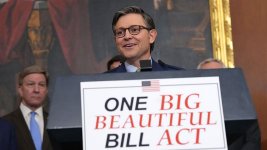
In a political climate already marked by division, spectacle, and policy upheaval, the United States finds itself at a defining crossroads in 2025. President Donald Trump, now well into his controversial second term, has achieved a legislative milestone—one that’s been met with both thunderous applause and widespread alarm.
Nicknamed the “Big Beautiful Bill” by its right-wing proponents, this sweeping tax and spending package narrowly passed the House with a 218–214 vote. It has already begun reshaping the American social, economic, and scientific landscape. Critics call it “the most ideologically extreme bill in decades.” Supporters hail it as “a realignment of American priorities.”
So, what does this legislation really mean for the United States—and for the rest of the world?
1. Inside the Big Beautiful Bill
At its core, the bill cements several major Trump-era policies while drastically curtailing others. Among the most impactful components are:
a. Tax Cuts for the Wealthy and Corporations
The 2017 Trump tax cuts have been extended indefinitely.
Corporate tax rates are now among the lowest in the G7.
High-income earners enjoy further breaks, which the administration argues will “stimulate growth and innovation.”
b. Cuts to Social Programs
Medicaid has been slashed by 12%, affecting low-income families and seniors.
SNAP (food stamps) faces new work requirements and a 9% funding cut.
Public education subsidies have been reduced, including programs for student meals and after-school care.
c. Scientific Research Defunded
Perhaps most jarring is the massive downsizing of the National Science Foundation (NSF). Once a bedrock of American innovation, the NSF has seen:
A 40% cut to its core research budget.
Suspension of early-career grants and PhD fellowships.
Closure of several regional research centers.
2. Science in Crisis
Reactions from the scientific community have been swift and severe. Nobel laureate Jennifer Doudna called the cuts a “scientific tragedy,” while MIT President Rafael Reif warned of a “permanent brain drain.”
Many U.S.-trained researchers are now being actively recruited by countries like Germany, Canada, South Korea, and Singapore, which are offering matching grants and fast-track citizenship programs.
“This isn’t just about budget lines. It’s about our global leadership,” says Dr. Arjun Venkatesh, a biomedical researcher whose NIH-funded lab faces closure. “The U.S. may be giving up the future—voluntarily.”
3. Immigration Enforcement Surges
The bill also allocates $25 billion in new funds for immigration enforcement. Highlights include:
Continued construction of the southern border wall.
Funding for 25,000 new ICE agents.
Stricter asylum eligibility rules and revived family separation policies at detention centers.
Human rights groups have condemned these changes, calling them “regressive” and “cruel.” But Trump supporters argue they are long overdue.
“This is about sovereignty. This is about safety,” said Rep. Jim Jordan, one of the bill’s vocal proponents. “We’re protecting American jobs and American borders.”
4. The Social Cost
For millions of Americans, especially the working class, the new bill translates into immediate financial and social pain.
Families relying on Medicaid now face longer wait times and reduced services.
Food banks report increased demand as SNAP cuts ripple through communities.
Students from low-income families are disproportionately affected by educational rollbacks.
“It’s a betrayal,” says Maria Lopez, a public school teacher from Arizona. “They say it’s for growth, but it’s at the cost of our kids.”
Civil society organizations have launched petitions and protests nationwide. As of July 4th, over 700 demonstrations have taken place in 42 states, many organized by groups like March for Science, Black Lives Matter, and MomsRising.
5. Political Fallout
The razor-thin passage of the bill revealed deep fault lines within Congress.
Democrats have unanimously opposed the bill, calling it a “blueprint for inequality.”
Moderate Republicans like Sen. Lisa Murkowski and Rep. Brian Fitzpatrick voted “No,” citing concerns over education and health cuts.
Far-right lawmakers celebrated the bill as “the greatest conservative achievement since Reagan.”
Polls show that while Trump's base remains loyal, independent voters are sharply divided. According to a June Gallup poll:
51% disapprove of the bill,
38% approve,
11% remain undecided.
The stakes are now high for the upcoming 2026 midterm elections, which could become a referendum on this sweeping legislation.
6. Global Response
The international community has reacted with a mix of concern and strategic recalibration.
 Scientific Partnerships Shift
With NSF budgets gutted, joint research projects with Europe and Japan have been paused or canceled. The European Research Council (ERC) has introduced a “U.S. Brain Gain” program to attract displaced American researchers.
7. Human Rights Scrutiny
The United Nations Human Rights Council has called for a review of the immigration policies funded by the bill, particularly the revival of child separations at the border.
8. Global Markets React
Markets initially surged with the promise of corporate tax cuts but remain volatile due to uncertainty around trade, migration, and global collaboration.
What Lies Ahead?
The Big Beautiful Bill is more than just a fiscal document. It’s a political manifesto, a declaration of the Trump administration’s vision for America: strong borders, deregulated markets, minimal welfare, and unilateral dominance.
But that vision comes at a cost.
A fractured scientific infrastructure,
Widening social inequality,
And an increasingly polarized political arena.
Will the benefits touted by the administration—economic growth, job creation, border control—materialize? Or will the backlash grow stronger, setting the stage for a seismic shift in 2026?
Only time will tell. But one thing is certain:
America is not the same country it was six months ago.
Nicknamed the “Big Beautiful Bill” by its right-wing proponents, this sweeping tax and spending package narrowly passed the House with a 218–214 vote. It has already begun reshaping the American social, economic, and scientific landscape. Critics call it “the most ideologically extreme bill in decades.” Supporters hail it as “a realignment of American priorities.”
So, what does this legislation really mean for the United States—and for the rest of the world?
1. Inside the Big Beautiful Bill
At its core, the bill cements several major Trump-era policies while drastically curtailing others. Among the most impactful components are:
a. Tax Cuts for the Wealthy and Corporations
The 2017 Trump tax cuts have been extended indefinitely.
Corporate tax rates are now among the lowest in the G7.
High-income earners enjoy further breaks, which the administration argues will “stimulate growth and innovation.”
b. Cuts to Social Programs
Medicaid has been slashed by 12%, affecting low-income families and seniors.
SNAP (food stamps) faces new work requirements and a 9% funding cut.
Public education subsidies have been reduced, including programs for student meals and after-school care.
c. Scientific Research Defunded
Perhaps most jarring is the massive downsizing of the National Science Foundation (NSF). Once a bedrock of American innovation, the NSF has seen:
A 40% cut to its core research budget.
Suspension of early-career grants and PhD fellowships.
Closure of several regional research centers.
2. Science in Crisis
Reactions from the scientific community have been swift and severe. Nobel laureate Jennifer Doudna called the cuts a “scientific tragedy,” while MIT President Rafael Reif warned of a “permanent brain drain.”
Many U.S.-trained researchers are now being actively recruited by countries like Germany, Canada, South Korea, and Singapore, which are offering matching grants and fast-track citizenship programs.
“This isn’t just about budget lines. It’s about our global leadership,” says Dr. Arjun Venkatesh, a biomedical researcher whose NIH-funded lab faces closure. “The U.S. may be giving up the future—voluntarily.”
3. Immigration Enforcement Surges
The bill also allocates $25 billion in new funds for immigration enforcement. Highlights include:
Continued construction of the southern border wall.
Funding for 25,000 new ICE agents.
Stricter asylum eligibility rules and revived family separation policies at detention centers.
Human rights groups have condemned these changes, calling them “regressive” and “cruel.” But Trump supporters argue they are long overdue.
“This is about sovereignty. This is about safety,” said Rep. Jim Jordan, one of the bill’s vocal proponents. “We’re protecting American jobs and American borders.”
4. The Social Cost
For millions of Americans, especially the working class, the new bill translates into immediate financial and social pain.
Families relying on Medicaid now face longer wait times and reduced services.
Food banks report increased demand as SNAP cuts ripple through communities.
Students from low-income families are disproportionately affected by educational rollbacks.
“It’s a betrayal,” says Maria Lopez, a public school teacher from Arizona. “They say it’s for growth, but it’s at the cost of our kids.”
Civil society organizations have launched petitions and protests nationwide. As of July 4th, over 700 demonstrations have taken place in 42 states, many organized by groups like March for Science, Black Lives Matter, and MomsRising.
5. Political Fallout
The razor-thin passage of the bill revealed deep fault lines within Congress.
Democrats have unanimously opposed the bill, calling it a “blueprint for inequality.”
Moderate Republicans like Sen. Lisa Murkowski and Rep. Brian Fitzpatrick voted “No,” citing concerns over education and health cuts.
Far-right lawmakers celebrated the bill as “the greatest conservative achievement since Reagan.”
Polls show that while Trump's base remains loyal, independent voters are sharply divided. According to a June Gallup poll:
51% disapprove of the bill,
38% approve,
11% remain undecided.
The stakes are now high for the upcoming 2026 midterm elections, which could become a referendum on this sweeping legislation.
6. Global Response
The international community has reacted with a mix of concern and strategic recalibration.
Scientific Partnerships ShiftWith NSF budgets gutted, joint research projects with Europe and Japan have been paused or canceled. The European Research Council (ERC) has introduced a “U.S. Brain Gain” program to attract displaced American researchers.
7. Human Rights Scrutiny
The United Nations Human Rights Council has called for a review of the immigration policies funded by the bill, particularly the revival of child separations at the border.
8. Global Markets React
Markets initially surged with the promise of corporate tax cuts but remain volatile due to uncertainty around trade, migration, and global collaboration.
What Lies Ahead?
The Big Beautiful Bill is more than just a fiscal document. It’s a political manifesto, a declaration of the Trump administration’s vision for America: strong borders, deregulated markets, minimal welfare, and unilateral dominance.
But that vision comes at a cost.
A fractured scientific infrastructure,
Widening social inequality,
And an increasingly polarized political arena.
Will the benefits touted by the administration—economic growth, job creation, border control—materialize? Or will the backlash grow stronger, setting the stage for a seismic shift in 2026?
Only time will tell. But one thing is certain:
America is not the same country it was six months ago.